
East Sussex
Plastering, rendering and damp proofing in Hove
Plastering, rendering and damp proofing across Hove, including the Regency and Victorian terraces between the seafront and the Old Shoreham Road.
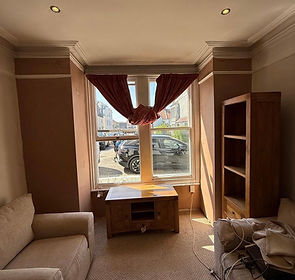
Larger Hove houses come with larger plastering jobs: high ceilings, deep cornices, bay windows and rooms that have been divided or altered over the years. Those details need someone comfortable working around original mouldings rather than cutting them out.
On the outside, the stucco frontages and garden walls take the coastal weather full on. We repair cracked and blown render, re-render where it has gone too far, and match the new finish to the rest of the building so a repaired bay does not stand out from the neighbours.
Areas covered: Brunswick · Palmeira · Cliftonville · Poets Corner · Aldrington · Hangleton · West Blatchington
Services in Hove
Based at Unit 10, Tungsten Building, George Street, BN41 1RA.
In detail
Plastering work in Hove, in practice
Plasterwork in Hove's Regency and Victorian houses
Hove houses come with high ceilings, deep cornices, bays and rooms that have been divided since the 1970s. Taking a wall back to brick is straightforward; making it look as though it was never touched is the part that takes care.
We repair cornice runs, work around original mouldings, and re-plaster to the depth and flatness the rest of the room expects. Where a solid wall has been covered in modern gypsum plaster, we will say when it should be lime instead.
Stucco, render and the seafront
The white stucco frontages and painted render around Brunswick and Palmeira take salt and wind from the same direction all year. Once water gets behind a cracked stucco coat the render loses its key, and the bays and parapets go first.
We repair and re-render, match the finish to the neighbouring elevations, and treat the damp that the failure let in before re-plastering inside. Garden walls and boundary render are usually done on the same visit.
Damp in a large Hove house
High parapets, hoppers that are awkward to reach, cellar lightwells and the junction between a bay roof and the wall are where water gets into houses of this age. The symptom is often a stain upstairs and blown plaster down at skirting level.
We trace it to the detail that is failing, get that made good, and only then replace the plaster, using a salt-resistant finish where the wall has been wet for a while. Big rooms with little ventilation often need the condensation side dealt with too.
Questions